
Cohort 6
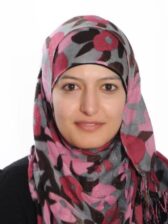
Amal Khayat
Amal is a Palestinian woman from East Jerusalem with a deep passion and drive for education and social change. As a Public Health scholar and determined activist, she has vowed to build bridges instead of walls and to ensure that the past does not dictate how we jointly shape the future.
“What’s next is a question I often ask myself. This question keeps me moving, keeps me looking forward and frames my thought process in a way that’s future-oriented. Sometimes, this question scares me, but mostly, it keeps me moving and looking forward to new beginnings, not taking life for granted.”
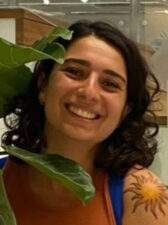
Betty Soibel
Betty was born in Israel to a Russian-Jewish immigrant family, raised in Los Angeles, and has lived in Jerusalem for the past decade. She works in nuanced Israel education, using storytelling to create spaces that invite complexity, curiosity, and reflection. After losing her husband to cancer this past year, Betty has been using writing and building shared creative spaces to explore what an abundant life can look amidst grief and loss. With a background in experiential education and guiding, she is drawn to learning that happens through encounter, story, and place—and can usually be found trying to write in a coffee shop or chasing her rescue dog, Jamila, through the hills around Jerusalem.
“My passion lies in creating spaces where multiple truths can be held simultaneously and exposed to deep critical but empathetic thinking. I always question the reality that is presented to me, wondering what the motivations are behind it and the ways that it can be changed. I also deeply believe in meeting people where they are at, and focusing not on policy changes but only on people’s unmet needs.”
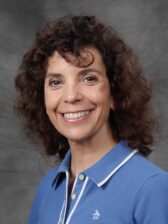
Eileen Angelini
Eileen received her Ph.D. and M.A. in French Studies from Brown University and her B.A. in French from Middlebury College. Toward the end of her Ph.D. candidature which focused on twentieth-century French literature, she recognized that there was a significant difference in the style of her authors before and after WWII. She thus determined that she would explore why this difference was so prominent. This exploration led her down the path of interviewing Holocaust survivors, hidden children, members of the French Resistance, and Righteous Gentiles. Her work with Holocaust survivors and documenting the events of the WWII Occupation of France was recognized by the French Government in August 2011 with the award of Chevalier dans l’Ordre des Palmes Académiques. This award was created by Napoleon Bonaparte in March 1808 as a reward for devotion and accomplishment in the realm of teaching.
“The main/operative/motivating question of my life is How can I best use my skills to bring others to being open to new possibilities?“
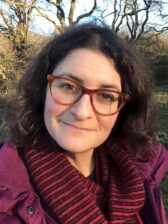
Emma Sevitt
Emma Sevitt is an experienced History teacher born in Toronto and living in London, UK. She focuses her teaching on the American Civil Rights movement as well as the study of the Holocaust. Her passion is to teach students to make connections between History and Human behaviour. In addition, she is committed to improving teaching practices to become more relational; so that teachers learn to develop strong relationships with students which are full of compassion and mutual respect.
“My passion is to strengthen democracy by preparing the next generation to build more civil and just communities based on knowledge and compassion. By nurturing empathy, curiosity, and civic responsibility, my passion is to teach young people to instill a responsibility to stand up to racism, antisemitism and other forms of bigotry and hate.”
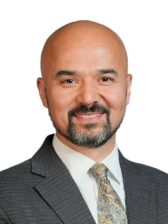
Kasim Kashgar
Kasim is a Uyghur journalist and founding executive director of Uyghur Monitor, a trilingual nonprofit newsroom for independent coverage of Uyghur communities. He previously served as Voice of America’s first dedicated Uyghur reporter, publishing over 300 stories in English and Mandarin. A Kiplinger Fellow (2025), he is the author of a forthcoming witness memoir about Uyghur life in China and exile. Before fleeing China in 2017, he founded Atlan Language Training Center in Ürümqi, which served over 100,000 students.
“The world urgently needs both education and truth-telling. My work lies at their intersection: creating platforms for exiled Uyghurs through Atlan Academy, reporting at Voice of America, and now building Uyghur Monitor to document truth and amplify silenced voices. Education without truth is hollow; truth without education is fragile. In a time when authoritarianism thrives on lies and erasure, I believe leadership must live at this intersection.”
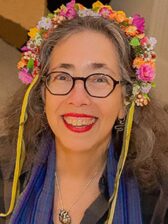
Melissa Hacker
Melissa Hacker is the daughter of a Kindertransport survivor from Vienna, Austria, and the Executive Director of the Kindertransport Association. Melissa is also a filmmaker who made her directing debut with the documentary My Knees Were Jumping; Remembering the Kindertransports, which was short-listed for Academy Award nomination and shown worldwide.
“As a filmmaker who works with themes of memory, family history, and loss, I am interested in visual storytelling experienced in community, in seeing worlds you would not be able to experience in person, unfurl before you. How can this develop understanding, courage and action? Engaging, informative, inspiring and beautiful art is always needed.”
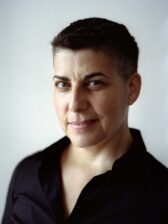
Rae Vineberg
Rae is a writer, theatre artist and a consultant in Whole Systems Change. Specializing in holding and designing supportive spaces for folx to bring their whole selves, to be seen, heard and witnessed in service of true and meaningful connections and conversations across divides. Masters degree in Human Systems Intervention, extensive training in Relational Culture and Lewis Deep Democracy. Rae is a bridge-builder, story honorer, a deep, deep believer that common ground can be found, that this place is a paradise and that we can love our way back to each other, ourselves, and to fiercely protecting and defending life and the dignity of all living beings.
“From my work in the theatre to public art interventions that I have created, to the somatic work I do in Focalizing, to facilitating change processes, I seem to create spaces wherein we can collectively and safely look at, hold, and gently tend to the secrets we are holding as a people, and as individuals. I think the intersection is in slowing down… slowing right down, not filling the silences, but finding them, together. Listening. Co-inquiry. Letting ideas arise. Resting. Restoring. Repairing. Receiving.”
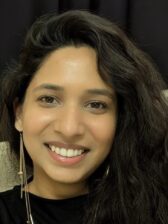
Raksha Sule
Raksha is a self- and system-transformation leader. For over a decade, she worked in the development and humanitarian sector. She is now founding a Canadian public foundation that invests in sacred love, to transform systems and inspire science, society and spirituality to meet and catalyze bold impact.
“My motivation in life is grounded in my purpose: to serve with love. For the past twelve years, this has meant serving in solidarity with people where the need is greatest – in the humanitarian and development space…How do we actualize divine/unlimited/sacred love and its expressions for an awakened and transformed humanity, especially with and for young people?”
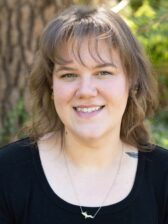
Rylee LaLonde
Rylee is an anthropology student at Michigan State University, focusing on bioarchaeology. She is passionate about braiding Indigenous knowledge into her studies and learning how to reconstruct the practice of bioarchaeology as it relates to Indigenous and descendant communities.
“How can human beings become better at protecting and respecting the dignity of all people—in both life and death? This question informs not only my personal ethical reflections but also my scholarly explorations. Throughout history, violence has been perpetrated upon countless communities across the globe. These human rights violations continue to persist today, revealing the deep disconnect between human action and understanding of the inherent, inviolable, and universal value of human life.”
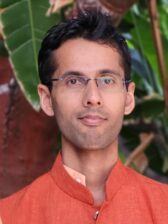
Vipul Shaha
Vipul Shaha is the founder of Mindful Being, a space dedicated to holistic education and wellbeing. A psychotherapist, mindfulness trainer, and educator, he has over a decade of experience working with children, youth, and young adults across diverse contexts worldwide. His work integrates psychology, mindfulness, yoga, nature-based learning, and youth mentorship. Vipul holds a master’s degree in Human Development and Psychology from Harvard and is a long-term Vipassana practitioner.
“I would like to create a ‘World Schooling Hub’ in my home village, where I grew up. Worldschooling is rooted in the belief that the world itself is our greatest classroom, and everything in it can be our teacher. Families engaged in worldschooling step beyond the confines of a traditional classroom—choosing to travel, explore, and learn from diverse places, cultures, and communities. Each hub becomes a space where learning is deeply connected to the local context: its land, waters, people, and culture. At its heart is the Ubuntu principle—it takes a village to raise a child.”